The Reflection Problem: Indoor Cameras, Glass and the Night Vision That Never Arrives
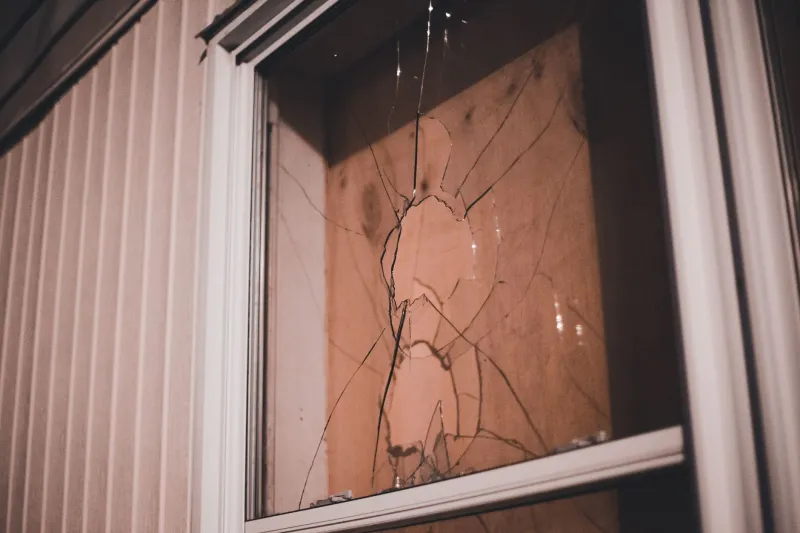
A camera on the windowsill is one of the most understandable shortcuts in home security. You get a view of the drive, the path or the front garden without drilling anything, running cable outside or asking anyone for permission. In daylight, it can look surprisingly good. Then the sun goes down, the camera clicks into night mode, and the picture turns into a pale, glowing mess with a faint reflection of your own living room floating in the middle of it.
That is not usually a faulty camera. It is physics having a quiet laugh at your expense.
What the camera is actually seeing
Most indoor cameras and many outdoor ones use infrared LEDs to see in the dark. The camera cannot detect infrared with the naked eye, but its sensor can. At night, those LEDs fire forward, bounce off the scene and return to the lens. That is how you get monochrome night footage without a visible spotlight.
Put a pane of glass in the way and some of that infrared light never reaches the garden. It hits the glass and reflects straight back into the lens. The camera is then looking at a bright reflection of its own LEDs, plus whatever is behind it in the room. A lamp, a net curtain, a door frame or the telly can all appear as ghostly shapes. The result is glare, haze and a white-out that hides the very thing you wanted to record.
This is why an indoor camera looking out often works fine during the day and becomes useless after dark. Daylight does not need the IR LEDs. Night does, and night is when the glass fights back.
Double glazing makes it worse
A single sheet of glass is bad enough. Modern UK double glazing adds more surfaces, more reflections and often a coating that is specifically designed to manage heat and light. Low-emissivity glass, sometimes called low-E, is brilliant for keeping warmth in. It is less brilliant for infrared CCTV, because some coatings reflect infrared energy rather than letting it pass through cleanly.
Add tinted film, reflective film, privacy film or a decorative frosted panel and the problem compounds. The camera may still produce an image, but contrast drops, detail softens and night mode becomes a lottery. Even the gap between the panes can create internal reflections that you cannot clean away.
Condensation is the other British classic. A cold autumn morning, a warm room and a sealed window unit can leave a fine film of moisture on the glass. The camera sees that as fog. Fingerprints, cleaning streaks and a dusty sill do not help either.
Curtains, blinds and the room behind the camera
It is tempting to think only about what is outside the window. The inside matters just as much. If a curtain is partly drawn, infrared light can bounce off the fabric and back into the lens. A blind left down will block the view completely, but even a blind left up can create a bright edge in the frame.
Then there is the room itself. At night, your camera is effectively filming through a mirror. If there is a light on behind it, or a window opposite, the reflection can be stronger than the street outside. Moving the camera a few centimetres away from the glass may reduce one reflection and introduce another. This is why fiddling with angles on a windowsill rarely solves the problem completely.
The window-mount myth
Window mounts can help, but they are not magic. A suction cup or bracket that holds the camera tight against the glass reduces the gap between lens and pane, which can cut down some stray reflection. A foam ring or lens hood pressed against the glass can block light from the room. Some cameras even have a window mode that switches off the IR LEDs and relies on ambient light.
That can produce a usable picture if there is a decent street lamp, porch light or well-lit forecourt outside. It will not give you true night vision through glass. If the camera has no window mode, you may be able to turn the IR LEDs off in the settings and see what happens. Often the answer is a dark, noisy image that is slightly better than a white blur, but not by much.
There are practical trade-offs too. A camera pressed to glass can pick up vibration from doors, buses or washing machines. It can leave suction marks. It can be knocked out of alignment when someone opens the window. And in a rented flat, it may still be the least invasive option available.
Move it outside if you can
At CMAC CCTV, the least popular answer is usually the right one: move the camera outside. A proper external camera under the eaves, above a door or on a garage wall avoids the glass problem entirely. It also gives you a better angle, fewer reflections and a housing designed for rain, frost and UV.
That is not always possible. Renters may not be allowed to drill. Flat dwellers may have no external wall they control. Conservation areas and listed buildings can add another layer of hassle. In those cases, be honest about what an indoor camera can and cannot do.
A camera behind glass can still be useful in daylight. It can record a parcel being dropped off, a car pulling onto the drive or a visitor approaching the door before dusk. If that is the job, fine. Just do not rely on it for night evidence. A camera that produces a bright, unusable blur is worse than no camera at all, because it creates false confidence.
A quick reality check
Before you buy another bracket or spend an evening adjusting angles, try a simple test. Wait until it is properly dark, turn off the room lights and look at the live view. Then switch the camera's IR LEDs off, if the settings allow, and turn on an outside light. Compare the two images. If neither is clear enough to identify a face or a number plate, the window is the problem.
Clean the glass on both sides, check for film or tint, and look for condensation between the panes. Try a temporary window mount with a foam ring if you already have one. But keep your expectations modest. Glass is not a neutral window on the world at night. It is an optical component, and it has opinions.
The sensible plan is usually a small external camera with a cable route you can live with, or a daylight-only indoor setup that you understand. The windowsill camera is not a con. It is just doing a harder job than it looks, and after dark it is often doing it through a mirror.